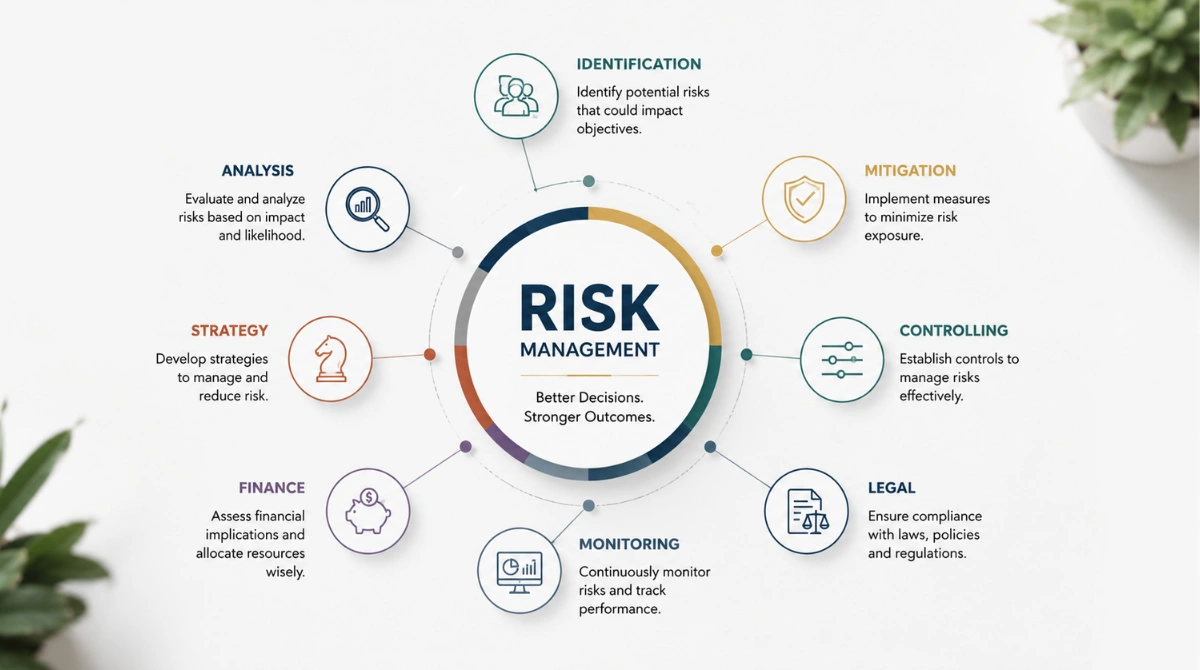
Risk is no longer a background concern for organizations – it is a constant factor shaping strategy, operations, compliance, and growth. In this environment, many businesses are turning to structured risk management workshops to strengthen how leaders and teams identify, assess, and respond to uncertainty.
Unlike traditional training sessions, risk management workshops are interactive, scenario-based, and designed to improve real-time decision-making. Organizations that invest in them – such as those supported by advisory and training-focused providers like Saudade Global Pathways – aim to build long-term internal capability rather than one-time awareness.
What Are Risk Management Workshops Designed to Do?
Risk management workshops are structured learning and facilitation sessions where teams analyze real operational risks and practice decision-making under uncertainty.
They typically focus on:
- Identifying internal and external risks
- Understanding risk exposure across departments
- Building consistent decision frameworks
- Improving communication during uncertainty
- Strengthening governance and accountability structures
Organizations use them to move from reactive decision-making to proactive risk-based planning, ensuring leaders do not rely on intuition alone.
Why Do Organizations Struggle With Decision-Making Without Risk Training?
Most decision failures do not come from lack of intelligence – they come from lack of structured risk thinking.
Common challenges include:
- Decisions made in silos without full risk visibility
- Inconsistent judgment across leadership levels
- Overconfidence in incomplete data
- Weak escalation processes during crises
- Limited alignment between strategy and operational risk
Without shared frameworks, organizations often respond to problems only after they escalate.
Risk management workshops address this gap by creating a common decision language across teams.
How Do Risk Management Workshops Improve Decision-Making?
Workshops improve decision-making by combining theory with practice. Instead of passively learning risk models, participants actively apply them to real scenarios.
They help organizations:
- Evaluate risks using structured frameworks
- Compare potential outcomes before acting
- Understand probability vs impact trade-offs
- Improve speed and accuracy of responses
- Reduce bias in executive decision-making
This hands-on approach strengthens both individual judgment and collective organizational intelligence.
What Skills Do Participants Develop During Risk Workshops?
Participants gain practical capabilities that directly influence workplace decisions:
- Risk identification and classification
- Scenario planning and forecasting
- Root cause analysis
- Crisis response coordination
- Regulatory and compliance awareness
- Prioritization under pressure
These skills are especially important in sectors where decisions affect safety, finances, or regulatory standing.
Organizations often integrate these workshops into broader enterprise risk management strategies to ensure consistency across leadership levels.
How Do Risk Workshops Influence Organizational Strategy?
One of the most overlooked benefits of risk workshops is their impact on long-term strategy.
When leaders better understand risk patterns, they:
- Make more informed investment decisions
- Improve resource allocation
- Reduce operational inefficiencies
- Anticipate market disruptions earlier
- Align strategy with risk appetite
Instead of treating risk as a limitation, organizations begin to treat it as a strategic input.
This shift is a key reason why modern consulting-led programs, including those focused on global education and leadership development like Saudade Global Pathways, emphasize experiential learning and real-world scenario training.
Risk Impact Areas in Organizations (Decision Influence Breakdown)
| Risk Category | Typical Workshop Focus | Decision-Making Impact |
| Operational Risk | Process failures, workflow gaps | Faster incident response |
| Financial Risk | Budgeting, forecasting, losses | Better capital allocation |
| Compliance Risk | Regulatory adherence | Reduced legal exposure |
| Strategic Risk | Long-term planning | Improved executive decisions |
| Reputational Risk | Stakeholder perception | Stronger brand protection |
This structured breakdown helps teams understand where decisions are most vulnerable and where improvements matter most.
Why Are Workshops More Effective Than Traditional Training?
Traditional training often focuses on theory, while workshops simulate real-world pressure.
Workshops are more effective because they:
- Use real organizational scenarios
- Encourage group problem-solving
- Simulate crisis environments
- Require immediate decision-making
- Promote cross-functional collaboration
This makes learning sticky – participants remember not just concepts, but how they applied them under pressure.
How Do Risk Workshops Improve Leadership Decision-Making?
For executives and managers, the biggest benefit is improved judgment under uncertainty.
Leadership teams learn to:
- Separate assumptions from facts
- Identify early warning signals
- Balance speed vs accuracy
- Evaluate worst-case vs best-case outcomes
- Make decisions aligned with organizational risk appetite
Over time, this leads to more consistent leadership behavior across departments.
How Do Organizations Measure Workshop Success?
Organizations evaluate impact using both qualitative and quantitative indicators:
- Reduced decision errors
- Faster incident response times
- Improved audit and compliance results
- Higher cross-team coordination
- Better risk reporting accuracy
- Increased leadership confidence in decision-making
Many organizations also track improvements in scenario-based simulations before and after training.
Why Are Risk Management Workshops Becoming Essential Today?
Modern organizations operate in environments shaped by rapid change – economic uncertainty, regulatory pressure, cybersecurity threats, and global disruptions.
Risk management workshops are becoming essential because they:
- Build organizational resilience
- Improve crisis readiness
- Strengthen governance systems
- Enhance strategic clarity
- Reduce dependency on reactive decision-making
Providers like Saudade Global Pathways emphasize long-term capability building through structured training and advisory models that integrate risk thinking into organizational culture.
The Strategic Value of Risk Management Workshops
Risk management workshops are no longer optional training exercises – they are strategic tools that reshape how organizations think, plan, and decide.
By combining scenario-based learning with structured risk frameworks, they help teams move from intuition-driven choices to evidence-based decision-making.
In a world where uncertainty is constant, organizations that invest in building strong risk decision capabilities are better positioned to adapt, compete, and grow sustainably.
FAQs
What is a risk management workshop?
A risk management workshop is an interactive training session where teams learn to identify, assess, and respond to risks using real-world business scenarios and structured decision-making frameworks.
How do risk management workshops improve decision-making?
They improve decision-making by teaching structured risk evaluation, scenario planning, and priority-setting, helping teams make faster and more informed choices under uncertainty.
Who should attend risk management workshops?
Executives, managers, team leaders, and operational staff should attend risk management workshops to build consistent decision-making skills across the organization.
What skills are developed in risk management workshops?
Participants develop skills in risk identification, crisis response, strategic thinking, scenario analysis, and evaluating potential outcomes before making decisions.
Why are risk management workshops important for organizations?
They are important because they reduce decision errors, improve crisis readiness, strengthen compliance, and help organizations operate more effectively in uncertain environments.