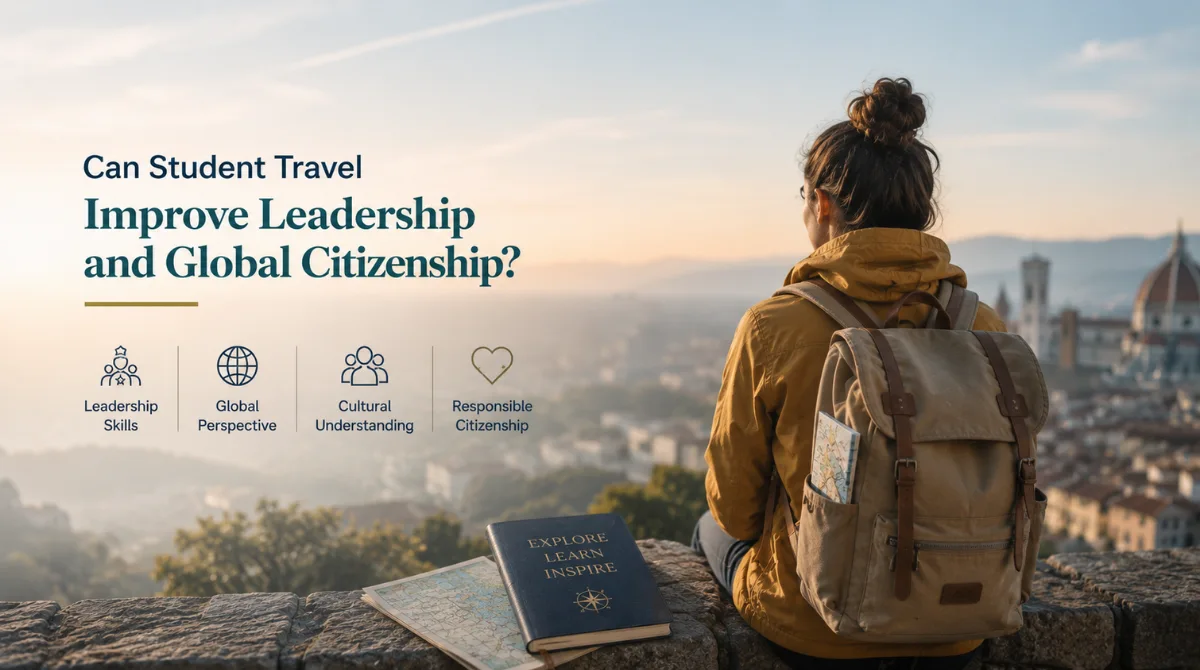
Student travel has evolved far beyond traditional educational field trips. Today, international travel programs provide students with opportunities to develop leadership skills, strengthen cultural awareness, and become responsible global citizens. By stepping outside familiar environments, students gain firsthand experience navigating diverse perspectives, solving real-world challenges, and collaborating with individuals from different backgrounds.
However, meaningful student travel requires careful planning and a clear educational purpose. When international experiences are intentionally designed with academic goals, cultural engagement, and experiential learning opportunities, they become powerful tools for personal growth, leadership development, and global awareness.
Organizations like Saudade Global Pathways help schools and educational institutions create impactful international programs that combine educational travel, curriculum consulting, professional learning, and risk management planning. Their comprehensive approach ensures student travel goes beyond sightseeing and becomes an experience that supports leadership skills and global citizenship.
What Is Leadership Through Student Travel?
Leadership is not only about holding a position of authority or managing a group. It involves communication, adaptability, empathy, critical thinking, and the ability to make responsible decisions in unfamiliar situations.
Student travel naturally creates opportunities for students to develop these qualities. Whether participating in cultural exchanges, educational tours, service-learning projects, or global studies programs, students are encouraged to solve problems independently, collaborate with others, and embrace new perspectives.
Unlike traditional classroom learning, international experiences place students in real-world environments where leadership skills develop through authentic interactions and hands-on experiences.
Understanding Global Citizenship
Global citizenship refers to understanding that individuals are connected to a larger international community and have responsibilities that extend beyond their local surroundings.
Students who develop global citizenship recognize the importance of cultural diversity, sustainability, ethical leadership, and international cooperation. They learn to appreciate different viewpoints while identifying shared values among communities around the world.
Educational travel provides an ideal environment for developing these skills because students interact directly with new cultures, traditions, languages, and communities rather than only learning about them through textbooks.
How Student Travel Develops Leadership Skills
Builds Confidence Through New Experiences
Travel places students in unfamiliar environments where they must navigate new transportation systems, communicate across language barriers, and adapt to different cultural expectations.
Successfully managing these experiences builds confidence and encourages students to become more independent decision-makers.
As students learn to handle uncertainty, they develop resilience and the ability to approach challenges with a leadership mindset.
Strengthens Communication Skills
Effective leadership depends on strong communication.
International travel encourages students to communicate with people from different cultural and linguistic backgrounds. They learn to listen actively, ask meaningful questions, and express themselves respectfully.
These experiences strengthen interpersonal skills that benefit students in higher education, future careers, and community leadership roles.
Encourages Problem-Solving
Unexpected situations are a natural part of travel experiences.
Schedule changes, unfamiliar environments, cultural differences, or group challenges require students to think critically and work together to find solutions.
Experiential learning environments help students develop flexibility, creativity, and collaboration skills that are difficult to replicate through classroom instruction alone.
How Student Travel Promotes Global Citizenship
Increases Cultural Awareness
One of the greatest benefits of educational travel is direct cultural immersion.
Students experience local traditions, history, education systems, and daily life firsthand. Instead of relying on assumptions or stereotypes, they develop informed perspectives through meaningful interactions.
This cultural understanding encourages empathy, respect, and appreciation for diverse communities.
Encourages Responsible Decision-Making
Global citizens understand that their choices can impact others.
Educational travel teaches students to respect local customs, protect cultural heritage, support responsible tourism practices, and engage positively with host communities.
These experiences encourage ethical leadership and social responsibility.
Connects Classroom Learning to the Real World
International education becomes more meaningful when students apply classroom knowledge in authentic environments.
History becomes more engaging when students visit important landmarks. Environmental science becomes more relevant through conservation activities. Language learning improves through real conversations with local communities.
This connection between academics and experience strengthens learning outcomes and develops a deeper understanding of global issues.
Student Travel by the Numbers
The growing focus on international education highlights the positive impact of student travel on personal and academic development.
| Student Travel Outcome | Impact |
| Improved cultural awareness after educational travel | Stronger understanding of global perspectives |
| Increased leadership abilities through international experiences | Greater confidence and decision-making skills |
| Enhanced communication skills through cultural interaction | Improved collaboration across diverse groups |
| Greater interest in global issues after travel programs | Increased engagement with international topics |
Supporting Student Leadership Through Global Education Programs
Creating meaningful international experiences requires more than arranging travel schedules. Schools need programs that connect travel opportunities with educational goals, student development, and institutional priorities.
Educational institutions can partner with global education consultants to design customized programs that align international travel with academic objectives and leadership development.
These services may include:
- Educational travel consulting
- Global studies consulting
- Curriculum development
- Experiential learning program design
- Risk management training
- Duty-of-care planning
- Professional learning for educators
- Cultural competency workshops
Rather than focusing only on travel logistics, a consulting-based approach helps schools create educational experiences that develop leadership skills, intercultural understanding, and lifelong learning abilities.
By combining strategic planning, academic alignment, and meaningful global experiences, schools can ensure international programs contribute to student success while building sustainable global education initiatives.
Best Practices for Educational Travel Programs
Schools seeking to maximize leadership development through student travel should consider several important practices:
- Establish clear educational goals before travel.
- Connect travel experiences with classroom curriculum.
- Include reflection activities before, during, and after programs.
- Prepare students through cultural competency training.
- Provide opportunities for students to take leadership roles.
- Encourage collaboration with local communities.
- Evaluate program outcomes to improve future experiences.
These strategies help transform educational travel from a short-term activity into a meaningful learning experience that supports long-term student growth.
Preparing Students for a Global Future
Today’s students will enter a world that requires adaptability, communication skills, cultural understanding, and the ability to collaborate across borders.
Educational travel helps students develop these competencies by placing them in authentic environments where they can learn, adapt, and grow.
As schools continue preparing students for an interconnected world, international learning experiences will remain an important part of modern education.
By combining curriculum planning, experiential learning, educator development, and thoughtful travel design, institutions can create opportunities that prepare students for academic achievement, professional success, and responsible global citizenship.
Transforming Student Travel Into Global Learning Experiences
Student travel is much more than an opportunity to explore new destinations. When carefully designed and connected to educational objectives, it becomes a transformative experience that develops leadership skills, cultural understanding, and global awareness.
Students gain confidence, improve communication, strengthen problem-solving abilities, and develop greater appreciation for cultural diversity through meaningful international experiences.
With expertise in educational travel consulting, curriculum development, experiential learning, risk management, and global education strategy, Saudade Global Pathways helps schools create international programs that inspire students to become capable leaders and engaged global citizens. By combining academic learning with purposeful travel experiences, educational institutions can prepare learners for success in an increasingly connected world.
FAQs
How does student travel develop leadership skills?
Student travel helps develop leadership by encouraging independence, problem-solving, communication, adaptability, teamwork, and decision-making in real-world international environments.
What is global citizenship in education?
Global citizenship is the ability to understand diverse cultures, respect different perspectives, act responsibly, and contribute positively to an interconnected global community.
Why is educational travel important for students?
Educational travel enhances classroom learning by providing hands-on experiences, improving cultural awareness, building confidence, and developing critical thinking and leadership skills.
How does Saudade Global Pathways support international student travel?
Saudade Global Pathways offers educational travel consulting, global studies consulting, curriculum development, experiential learning design, risk management training, and educator professional learning to create safe and impactful international education programs.
What are the benefits of international travel for students?
International travel helps students improve communication, cultural competency, leadership, adaptability, collaboration, and global awareness while preparing them for future academic and professional success.