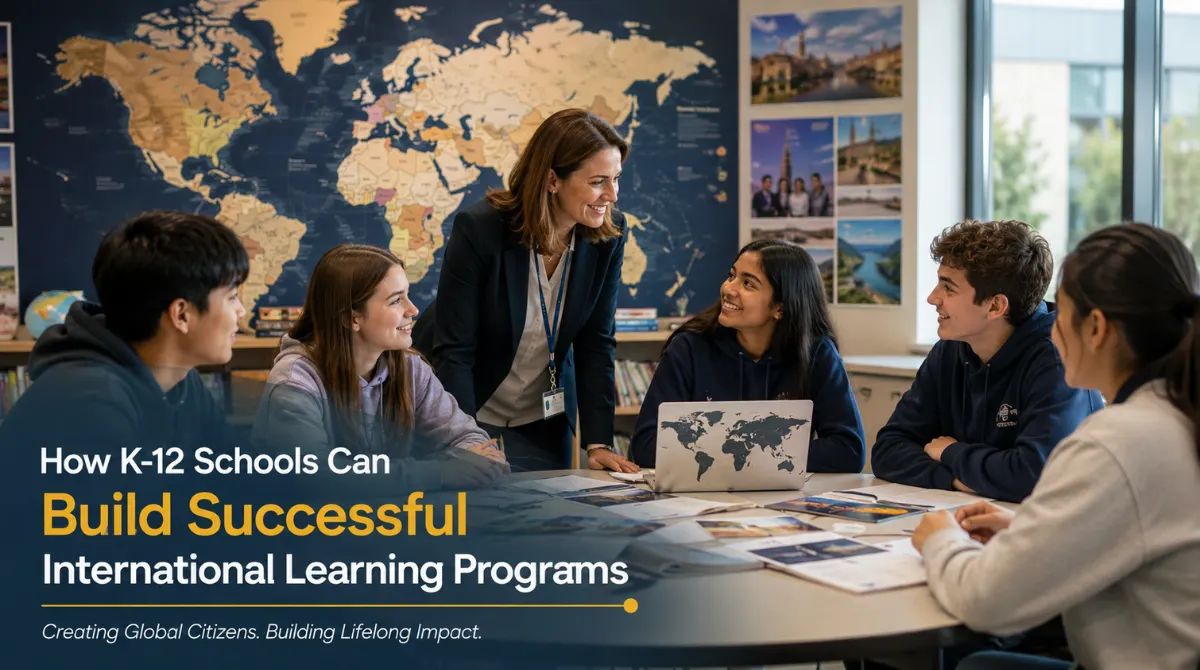
International learning programs are no longer considered optional enrichment opportunities. For many K–12 schools, they have become an essential part of preparing students for a globally connected future. Schools that build successful international learning initiatives help students develop cultural competence, global awareness, leadership skills, and the ability to collaborate across borders.
The most effective programs go beyond occasional student trips. They create a long-term framework that integrates travel, global citizenship, educator development, risk management, and cross-cultural learning into the school’s mission. Organizations such as Saudade Global Pathways emphasize a consulting-first approach that helps schools create sustainable global education systems rather than isolated experiences.
Why Are International Learning Programs Important for K–12 Schools?
Today’s students will enter a world where international collaboration, cultural understanding, and global problem-solving are increasingly valuable skills. Schools that provide meaningful international learning experiences create opportunities for students to engage with diverse perspectives while developing confidence and adaptability.
Research consistently shows that immersive global experiences can improve communication skills, critical thinking, and cultural awareness. More importantly, these experiences often leave a lasting impact long after students return home. The goal is not simply to visit another country but to create transformational learning experiences that influence how students see themselves and the world around them.
What Are the Core Components of a Successful International Learning Program?
Building a successful international learning program requires more than booking travel arrangements. Schools need a comprehensive strategy that supports students, educators, administrators, and families.
The most successful programs typically include:
- Clear alignment with school mission and values
- Strong risk management and duty-of-care practices
- Professional development for educators
- Purposeful travel and exchange opportunities
- Long-term sustainability planning
- Cultural competency development
- Ongoing program assessment and improvement
When these elements work together, schools create a framework that extends far beyond a single international trip.
How Should Schools Align Global Learning with Their Educational Mission?
Many schools make the mistake of treating international experiences as extracurricular activities rather than educational priorities. Successful programs begin with a clear understanding of why global learning matters to the institution.
School leaders should ask questions such as:
- What global competencies do we want students to develop?
- How does international learning support our strategic goals?
- What outcomes should students achieve through participation?
- How can global education become part of everyday learning?
When global learning is connected to the school’s mission, it becomes easier to secure faculty support, administrative buy-in, and long-term investment.
Why Is Risk Management Essential for International Programs?
Student safety remains one of the most important responsibilities for schools operating international programs. Effective risk management protects students, supports educators, and builds confidence among families.
Schools should establish:
- Emergency response procedures
- Chaperone training programs
- Health and safety protocols
- Communication systems for families
- Destination-specific risk assessments
- Incident management procedures
Comprehensive travel chaperone training can help educators prepare for real-world situations before they occur, ensuring that leaders feel confident and capable when supervising students abroad. Saudade Global Pathways places significant emphasis on duty-of-care training and risk management preparation for both K–12 schools and universities.
How Can Schools Prepare Educators for Global Learning Leadership?
Even the best-designed program can struggle if educators lack the skills needed to facilitate international learning experiences.
Professional development should focus on:
- Global pedagogy
- Intercultural communication
- Student reflection practices
- Experiential learning design
- Leadership development
- Cultural responsiveness
Faculty members who understand how to guide meaningful reflection and cultural engagement can transform travel experiences into powerful educational opportunities.
Schools that invest in educator coaching and mentorship often see stronger student outcomes and more sustainable program growth over time.
What Makes International Travel Educational Rather Than Touristic?
One of the biggest differences between a successful international learning program and a standard student trip is intentional design.
Educational travel should include:
Purpose-Driven Learning Objectives
Every activity should connect to academic, cultural, or leadership goals.
Authentic Cultural Engagement
Students should interact with local communities, not simply observe them.
Structured Reflection
Journals, discussions, and projects help students process and apply what they learn.
Student Agency
Students should actively participate in learning rather than passively consume experiences.
Purposeful travel design ensures that international experiences become meaningful educational journeys instead of sightseeing opportunities. Saudade Global Pathways emphasizes customized travel and exchange program design aligned with each school’s mission rather than relying on standardized travel products.
How Can Schools Create Sustainable Global Education Programs?
Many schools launch successful programs only to see them disappear when a key leader leaves. Sustainability requires intentional planning and institutional commitment.
Schools can improve sustainability by:
- Developing written global education frameworks
- Creating leadership teams instead of relying on one champion
- Embedding global competencies into curriculum
- Establishing annual program reviews
- Investing in faculty development
- Building long-term international partnerships
The objective is to create systems that continue to thrive regardless of staffing changes or leadership transitions.
How Should Schools Measure Success?
Successful international learning programs should be evaluated using both quantitative and qualitative measures.
Possible indicators include:
- Student participation rates
- Faculty engagement levels
- Student reflection outcomes
- Cultural competency growth
- Family satisfaction
- Retention and expansion of programs
- Long-term student impact
Schools that regularly assess outcomes can identify strengths, address challenges, and continuously improve program quality.
What Is the Future of International Learning in K–12 Education?
The future of global education will likely involve a combination of travel experiences, virtual exchanges, intercultural partnerships, and curriculum integration. Schools that succeed will move beyond one-time programs and build comprehensive ecosystems of global learning.
Students need opportunities to understand different cultures, navigate complexity, and collaborate across geographic boundaries. International learning programs provide a powerful pathway for developing these capabilities when they are thoughtfully designed, carefully managed, and aligned with a school’s broader mission.
By focusing on educator preparation, student safety, purposeful program design, and long-term sustainability, K–12 schools can create international learning experiences that leave a lasting impact – both during the journey and long after students return home.
FAQs
What is an international learning program in K-12 education?
An international learning program is a structured educational initiative that helps K-12 students develop global awareness, cultural competence, and cross-cultural communication skills through travel, exchanges, partnerships, and experiential learning opportunities.
Why are international learning programs important for K-12 students?
International learning programs help students gain real-world perspectives, improve communication skills, build cultural understanding, and prepare for success in a globally connected workforce and society.
How can schools create a successful international learning program?
Schools can build successful international learning programs by aligning global education with their mission, implementing strong risk management practices, training educators, designing meaningful experiences, and regularly evaluating outcomes.
What should schools consider when planning student international travel?
Schools should prioritize student safety, destination risk assessments, emergency response plans, chaperone training, communication procedures, educational objectives, and cultural engagement opportunities when planning international travel.
How do international learning programs benefit teachers and schools?
International learning programs support educator professional development, strengthen school reputation, increase student engagement, enhance global competencies, and create meaningful partnerships with international communities and institutions.